Introduction
Thinking Through Things is a methodology developed by Nube Lab to foster collaborative learning among international students through objects from university digital collections in the U21 network. The process begins with intuitive exploration dynamics and imaginative play, then moves toward critical questions, group work, connections with the surrounding environment, and pedagogical reflection. The objective is not only to know an object, but to learn with and through it, based on the experience of students from different cultures, moving across one's own perspectives in order to generate collective and global knowledge.
This methodology is especially recommended for application in COIL courses (Collaborative Online International Learning).
Before beginning, we invite you to watch a video recorded in May 2026 at the home-studio of Gloria Huenchuelo, a Mapuche cultural practitioner:
"We cannot just arrive and enter a place. We have to ask permission, connect with that space — because everything that surrounds us has life."
Let's Start
Thinking Through Things is made up of six steps for approaching objects from digital collections, playing, imagining, and reflecting through them.
For the implementation of this course, work in groups of four is recommended, made up of two pairs of students from international universities.
Before beginning, it is necessary to create a group work logbook and host it in a shared online folder (see available template). This logbook will allow instructors and students to view and monitor work processes on a weekly basis.
Suggested Online Group Work Timeline
Total estimated time: 6.5 hours.
- 5 hours synchronous
- 1.5 hours asynchronous
Step By Step
Step 0: Ice Breakers
Short icebreakers to get to know one another, build trust, and spark initial reflection on objects. (60 mins.)

Step 1: Be Curious
Explore the digital collections with curiosity and intuition to choose an object that catches your eye. (60 mins.)
Step 2: Look And Pause
Carefully observe the object by drawing and describing it to uncover hidden details and meanings. (50 mins.)
Step 3: Imagine
Play, imagine, and embody the object to unlock new creative interpretations. (40 mins.)
Step 4: Go Deeper
Participants research the object's context, origin, and function using collection data to deepen understanding and interpretation. (60 mins.)
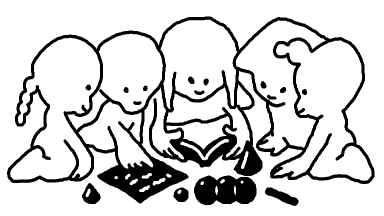
Step 5: Engage
Participants connect the object with personal experiences, cultural contexts, or memories, building meaningful relationships and insights. (90 mins.)
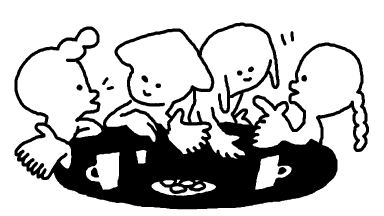
Step 6: Reflect
Participants review the process, share insights, and reflect on learning outcomes from observing, imagining, and interpreting objects. (30 mins.)